
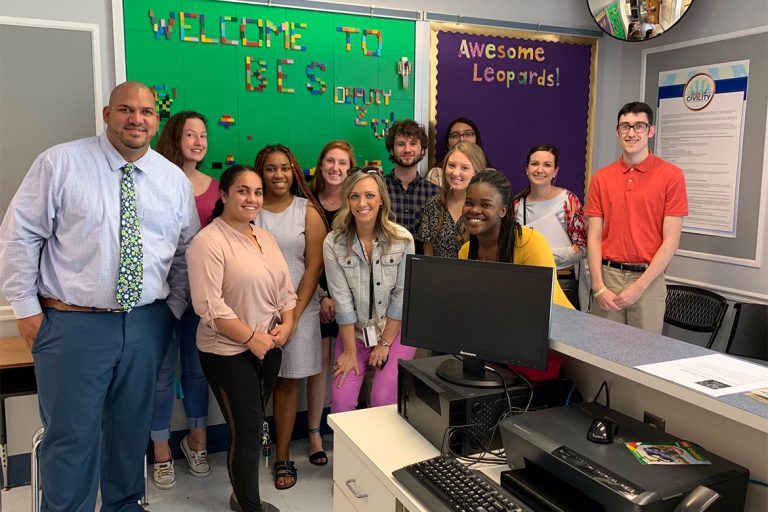
Teacher. Coach. Mentor. Administrator. Leader. These are all words used to describe Saint Leo alumnus Mike Lastra ’15. His passion is for lifting others up, helping them grow as students and educators. And he gives back to his alma mater in one very tangible way: He shares his love of learning and teaching with current Saint Leo University students and the greater education community.
Lastra earned his Master of Education degree with a specialization in educational leadership in 2015 from Saint Leo. He was named principal of Brooksville Elementary School in Hernando County, FL, in 2018. In addition to being the principal, Lastra is pursuing a Doctor of Education degree in school leadership at Saint Leo, and also serves as an adjunct faculty member for the university.
The road to becoming an educational leader started with a desire to be an athletics coach. He earned his bachelor’s degree from Chowan University in North Carolina and began teaching high school biology in 2004. “I taught high school for 12 years and coached football and wrestling,” Lastra said. “It was fun, and it was rewarding.”
He said it was a natural progression to become an administrator, something he did in 2015, when he became the assistant principal of Eastside Elementary, also in Hernando County. “I really started taking more leadership roles as a teacher-leader,” Lastra said. “The coach in me made me want to do that.”
It was suggested that he move into administration. “I never had taught a day of elementary,” he said. “I went from high school teacher to assistant elementary principal. It was a very different jump. The principal who hired me said, ‘leaders are leaders, and I can teach you what you need to be an elementary assistant principal.’”
From that point forward, Lastra’s leadership abilities and skills grew. He found great value in his Saint Leo education, which helped prepare him for his leadership role, Lastra said. “When we talk about the administrative, planning, and learning domains, the [Master of Education] program definitely prepares you for that,” he said. “With the Saint Leo program, we had to get practicum hours. That really rounds you as a leader.”
While some people may think that an online degree program isn’t as strong as the in-classroom experience, Lastra said at Saint Leo that is not the case because of the people—the dedicated faculty, staff, and students.
“I think the sense of community at Saint Leo, the teachers, and those working with Saint Leo in many capacities, truly prepare their graduate and undergraduate students to become teachers and administrators. “I don’t know of any other university where you get that sense of community,” Lastra said. “Even with the online programs, there is that feeling of being a part of the community.”
‘A Teacher’s Principal’
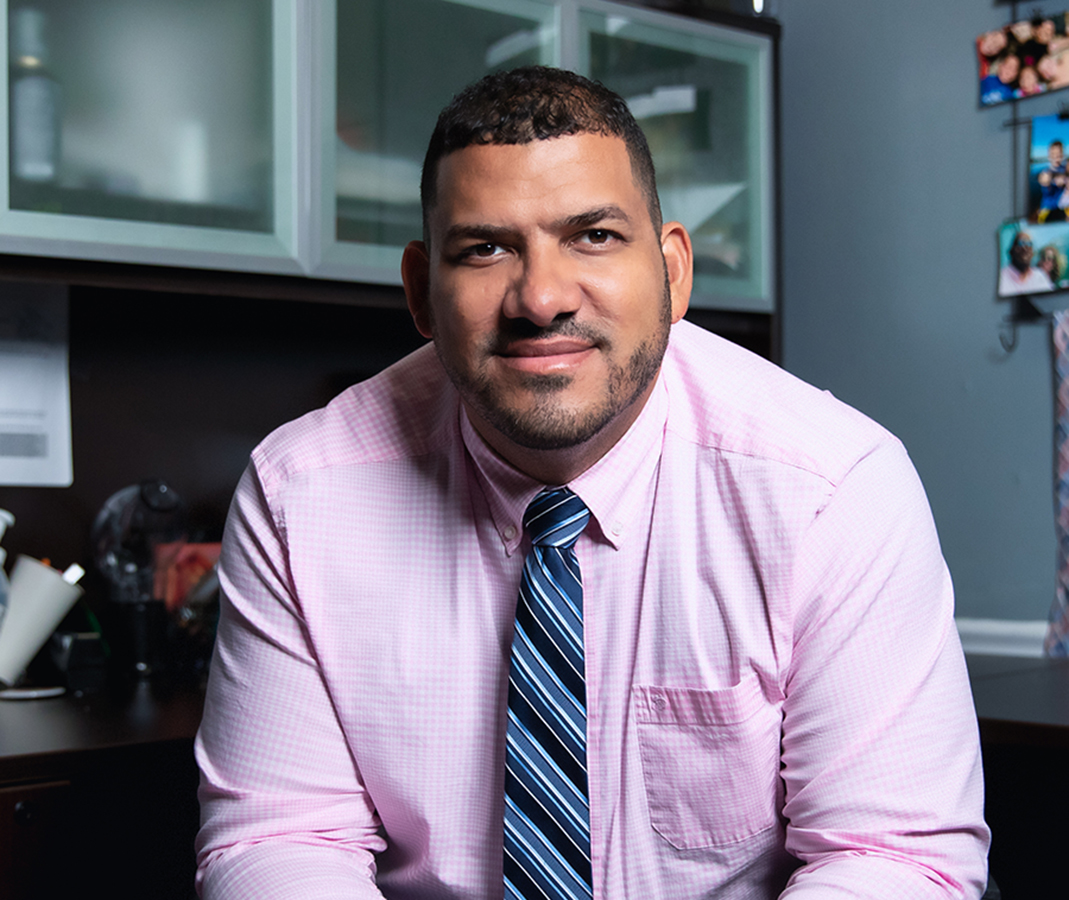
Now, Lastra contributes to the next generation of teachers as well as those who already are working in school districts throughout Florida. In addition to Saint Leo students, Lastra and his school works with students at schools across the state.
“Mike’s impact ranges from pre-service teachers, to university undergraduate and graduate programs, to elementary students and their families, his teachers, and the greater education community,” said Dr. Holly Atkins, chair of Saint Leo’s undergraduate education program.
He has conducted presentations for Saint Leo’s Teacher Technology Summer Institute, sharing innovative best practices for the meaningful use of technology in K-12 classrooms, Atkins said. “Teachers are often heard saying, ‘I want to go work for him!’ He is what I would call a ‘teacher’s principal.’ He walks the walk, doesn’t just talk the talk.”
Lastra has become something of a “tech guru” for educators and educators-to-be, teaching them how to use technology in the classroom and reach their students using it.
For Saint Leo students, he is a favorite speaker for Dr. Rachel Hernandez’ educational technology class. “For the last five semesters, he has been hosting a technology field trip each semester at his school,” Hernandez said. “The [Saint Leo] students tour the classrooms to see [elementary school] students engaged in various tools that enhance learning. He then takes the students and gives a debrief so that they can ask questions.”
Lastra said he thinks it is important for Saint Leo’s education students to visit with tech-savvy teachers. “It’s so powerful for Saint Leo students to see what they’ve been learning in their classroom, working in real life,” he said. “Some of the students say they learned more that day than all year!”
He also is a popular adjunct instructor for the university, Atkins said. “He shares his real-world knowledge teaching EDU 428: Educational Governance,” she said. “Students learn the legal, ethical rights, and responsibilities of classroom teachers through the leadership of an instructor who lives these principles each day.”
To encourage faculty at his school to engage in after-school professional development, Lastra holds “Tech Taco Tuesdays.”
“Teachers attend the technology-focused professional development, and he feeds them,” Atkins said. “Most often, he is the presenter. This is so important in creating a culture in which teachers actively see their principal right there with them—working together to support the school community.”
While he is serious about the business of being an educator, Lastra’s favorite thing is “acting like a kid all the time.” He participates in dress-up days at the elementary school, dressing in silly outfits and costumes, which he says “keeps him young at heart.”
Lastra also persists in his own education. “The love of learning is really just being a continuous learner,” he said. “Whether it’s going to a conference, reading up on the latest trends, or sharing our knowledge. When I stop learning, I should really retire!”
He also looks to hire teachers who will follow in his footsteps. “My main thing is I want a teacher who is passionate and is all about kids,” he said. He advises anyone who wants to be an educator to “remember your why” and keep the reason for being an educator at the forefront.


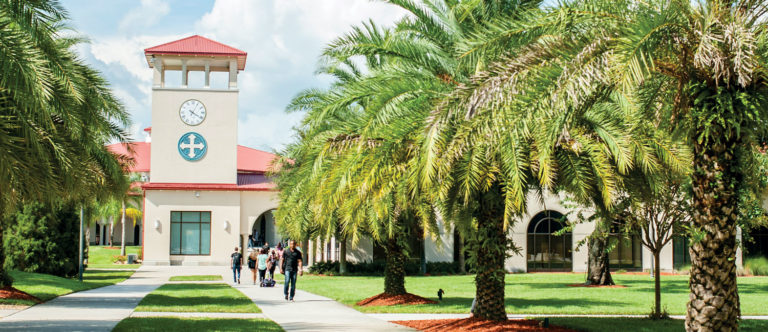
 At the start of the new academic year, Saint Leo University re-imagined its three major academic units, and each is now a college rather than a school: the College of Arts and Sciences, the College of Education and Social Services, and the Donald R. Tapia College of Business. This subtle, but strategic move was made to reflect the plurality of subject areas taught within each of Saint Leo’s academic divisions, as well as the current prominence of graduate degree programs among the mix. It also positions the university for future growth. Additional colleges will be added in the coming years to reflect Saint Leo’s focus on academic excellence in teaching and learning and to make explicit particular groupings of programs and new program areas.
 In May, the new Doctor of Education: School Leadership and Doctor of Criminal Justice (specializations offered in homeland security and education) degree programs were approved by the Commission on Colleges of the Southern Association of Colleges and Schools. The programs quickly met enrollment goals for their first classes.
 During the summer, Saint Leo University Athletics announced it will add acrobatics and tumbling to its intercollegiate athletics program in 2020. Acrobatics and tumbling, a discipline of USA Gymnastics, is the evolution of different forms of gymnastics and involves tumbling, tosses, and acrobatic lifts and pyramids. Teams participate in head-to-head competition and are scored in six events.
 The Saint Leo University College of Education and Social Services recently launched the Educator Preparation Institute, a program that provides an alternate route to teacher certification for mid-career professionals and college graduates who were not education majors. After passing the general knowledge and one subject area competence exam and securing a letter of eligibility from the state, individuals can enroll in the program to prepare to take the Florida Teacher Certification Exam. The Educator Preparation Institute program is available at both the undergraduate and graduate levels. For more information, visit
  Political science major Jeanine Ramirez ’20 and social work major/American politics minor MacKenzie Jones ’19, spent two months this summer in Washington, DC, in a selective internship program. It is called the Congressional Fellows Program and admits only 35 undergraduates for the eight-week summer program. The fellows work three days a week in the offices of members of Congress. Time is also spent each week on community service and leadership development. This fellowship placement is a first among Saint Leo students.





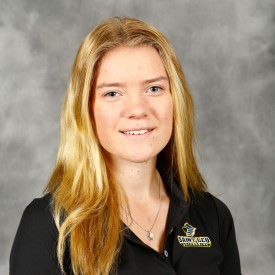
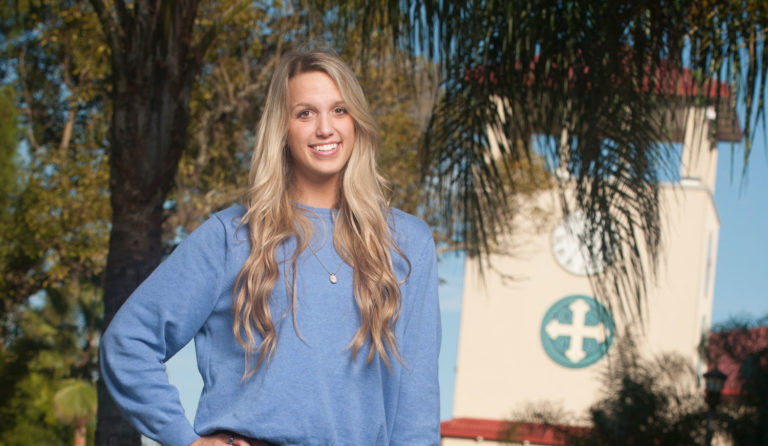
 While in high school, the young volleyball player knew she wanted to compete on the collegiate level, was set on Division II, and was focused on a college in New Jersey. However, while competing in a tournament in Colorado, she caught the eye of Coach Sam Cibrone, who was there with his Tampa United volleyball club. One thing led to another, and she decided to pay Saint Leo a visit. She toured the campus, met the team, and instantly knew that the Lions were the team for her. Another important moment from that tournament? She spiked the ball on one play, hitting Maddy Powell—from the opposing team—right in the face. But no hard feelings—the two players are now roommates at Saint Leo.