
Tapia College of Business Hosts Webinar Series to Help Struggling Businesses
 Realizing there was a need to assist the Tampa Bay-area business community, Saint Leo University’s Tapia College of Business offered a free, four-part webinar series, Business Re-Imagined: Insights for Small Businesses in the COVID-19 Landscape in June and July.
Saint Leo University faculty and members of the Tampa Turnaround Management Association organized the sessions, engaging with other regional industry experts to provide operational, financial, human capital, and strategic guidance for small businesses.
“We recognize that this is a challenging time and the COVID-19 pandemic has caused some really unique challenges for small businesses,” said Dr. Robyn Parker, dean of the Tapia College of Business. “We thought we would gather together a set of experts and resources to help you as you think about what some call ‘re-ing business:’” Reopening, going remote, restructuring, refinancing, rethinking, replanning, and redeploying.”
The four parts in the webinar sessions were:
- The COVID-19 Factor: An Overview of How COVID-19 is Impacting Businesses;
- Addressing the Pandemic Recession: HR, Business Operations, and Supply Chain Impact;
- Your Business Model: Strategic Direction for Pandemic Recession Recovery; and,
- Financial Frenzy: Financial Options and Resources Related to COVID-19.
Phase 2 of the series was Workplace Re-Imagined on October 8, which featured experts from three of the university’s colleges presenting a multidisciplinary look at helping employees in the “new normal.” The webinar focused on “human capital and the return to the workforce.”
Business Re-Imagined webinars may be viewed at saintleo.edu/business-events.
“Saint Leo and the Tapia College of Business wanted to do something to give back to the community,” Parker said. “’Community’ is one of Saint Leo’s core values, and we thoroughly embrace the idea of helping others. We hope to hold more webinars in the future to assist not only the community, but also as a learning experience for our students.”
Saint Leo University Students Volunteer at Food Distribution to Help In COVID-19 Pandemic
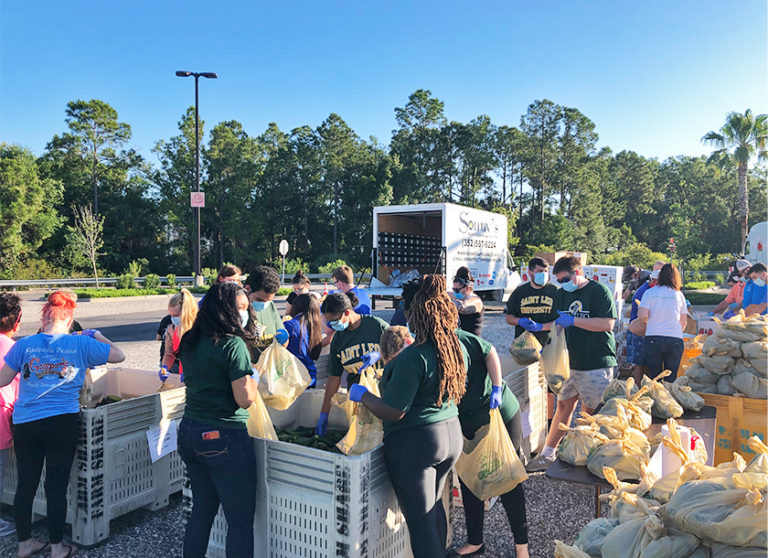
 Saint Leo University students joined in the Farm Share food distribution on May 20 with Florida Representative Randy Maggard and Pasco County Board of County Commissioners Chair Mike Moore at the Shops at Wiregrass mall in Wesley Chapel, FL.
Cars lined up near the distribution point as Saint Leo students joined others to distribute much-needed food as Pasco County, FL, residents deal with the fallout from the COVID-19 pandemic. Many are out of work and need assistance. True to the university’s core values, Saint Leo students stepped up to help.
More than 50 volunteers, including the Saint Leo students, handed out 33,000 pounds of food to about 700 people. The volunteers wore masks and followed Centers for Disease Control protocols as they loaded the food into recipients’ vehicles at the drive-thru event.
“I greatly appreciate the hard work the Saint Leo students put in volunteering with the Farm Share food distribution,” Moore said. “They worked in roles from bagging food to directing traffic to placing food in vehicles. Pasco County is a community that cares and volunteering to help others shows that.”
MBA Students Help Ybor Businesses
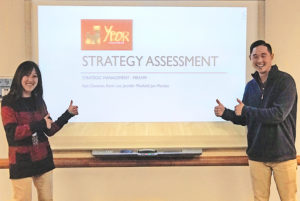
In the spring, the Tampa (FL) Education Center’s MBA-599 class, taught by Dr. Helen MacLennan, assistant professor of management, worked in small teams to conduct their capstone project, a business strategy analysis they created free of charge for local businesses. The students assisted Tampa-area businesses, including the Ybor City Chamber of Commerce; the Ybor City Visitors Information Center; Centro Asturiano de Tampa; and the Ybor City Saturday Market.
The analyses included an internal and external assessment, competitor and marketing analysis, and financial projections. It offered possible alternative strategies for these businesses, along with suggestions for implementation.
Lee Bell, president of the Ybor City Chamber of Commerce, indicated that the information contained in these analyses was valuable and that the chamber had started the process of implementing some of the suggestions.
Health Education and Health Promotion
The university announced the start of a new four-year degree—a Bachelor of Science in health education and health promotion—that will prepare graduates for a growing number of health education positions at community organizations, healthcare agencies, and workplaces.
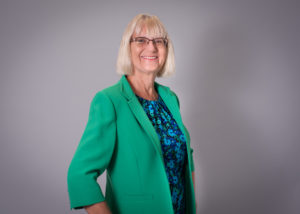
Health education specialists help the public understand how to cope with health challenges they face, whether as individuals or as concerned family members. “Health education specialists are bridging an important gap between what individuals, families, and communities know and understand, and the increasing amount of knowledge available,” said Dr. Kathleen Van Eerden, associate dean of Saint Leo’s College of Health Professions.
For instance, the specialists develop and adapt group education programs, offer instruction in healthy habits and preventative measures, and provide information on what kinds of health care services are available to the public. The coronavirus is a vivid example of a situation where health education specialists have played a positive role, Van Eerden noted, by providing reliable instruction on correct handwashing techniques and social distancing. Diabetes and heart disease are two other examples of conditions where health education specialists can make a difference in individuals’ lives, she added.
Psi Chi International Honor Society
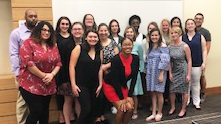
Over the summer, the Saint Leo University chapter of the Psi Chi International Honor Society in psychology learned it had been named a model chapter for the 2019-2020 academic year. Only 23 chapters of the 1,180 in the society were selected for the honor. A model chapter is distinguished by the high level of interest and activity of members, as well as sound organizational practices. The chapter had 33 members in the most recent academic year, led by chapter president Caitlin Walsh ’20. Psi Chi offers lifetime memberships.
Dr. Tammy Zacchilli, an associate professor of psychology, has been the chapter advisor for 10 years. She said she was both excited about the recognition and proud of the Saint Leo chapter members. “They worked so hard last year and continued to hold meetings in Zoom after classes moved online [because of the virus]. We had a creative group of officers who led interesting activities all year.”
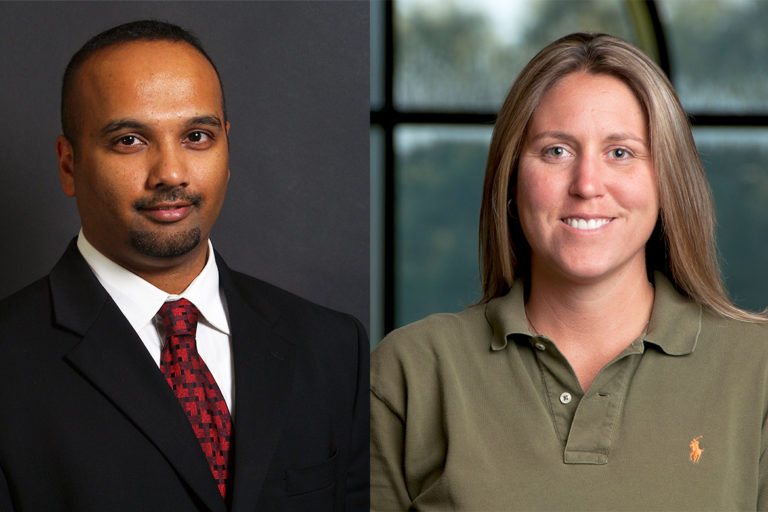
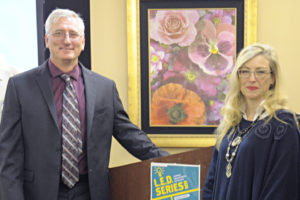 Historical research by Dr. Karen Hannel of the College of Arts and Sciences and her husband, Dr. Eric Hannel, an adjunct instructor with Saint Leo, prompted the state of Florida to approve the placement of an official marker to note that a vibrant township once existed north of University Campus in the 1800s. The town of Chipco was a trading post established by white settlers and was named for a Seminole chief who actually lived nearby, but separately, with some members of his tribe for a time after the mid-1850s. The white town grew to have a nearby railway link, lumber-planing mill, grist mill, school, and post office, along with farms. The Pasco County (FL) town reached the peak of its commercial prominence in the 1880s, but disappeared by 1909 after a series of economic reversals. Chief Chipco and his band had long since moved to a different locale in mid-Florida, and the chief died in 1881 at more than 100 years of age, according to a newspaper account. The Hannels continue to research this settlement, as its trajectory illustrates so much about the racial interactions, intermittent wars, and economic developments of 19th-century Florida.
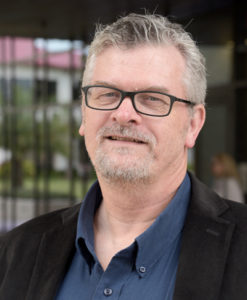 Dr. Iain Duffy, a microbiologist and member of the science faculty at University Campus, is president of the Florida Academy of Sciences and is now in the second year of a two-year term. The academy is comprised of scholars from the life sciences, physical sciences, social sciences, computer and mathematical sciences, and science teaching, and publishes a quarterly journal.
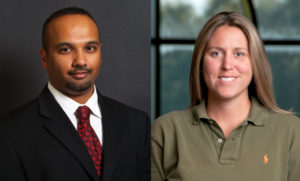 Dr. Leon Mohan and Dr. Deneˊ Williamson of the Tapia College of Business were published in late 2019 in the International Journal of Sport, Exercise and Physical Education with their article “Youth Sport Participation as a Result of Social Identity Theory.” The article describes survey research conducted in a South Florida city with youths involved with sports through various community organizations. In particular, the researchers zeroed in on children ages 9 to 13, who were primarily African American and Hispanic, to see what role social factors played in getting and keeping the youths involved in sports. The short-term objective was to help associations find influences that can be maintained to get and keep children physically active. Sports that parents and guardians were familiar with, sports played by famous athletes, and sports played by friends and peers were motivating influences. The business professors included work by undergraduate student John-Paul West in their research and publication.
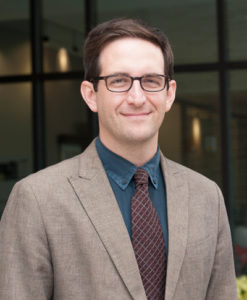 Dr. Matthew Tapie, theology faculty member and director of the Saint Leo University Center for Catholic-Jewish Studies, was invited in February by Spring Hill College in Alabama to deliver a talk on a particularly difficult point in Catholic and Jewish relations. Since 2018, Tapie has been speaking in academic settings and published in academic theological journals on the new controversy about the forced religious conversion of a young boy named Edgardo Mortaro in Bologna, Italy, in 1858. The child was being raised by a Jewish family, in accordance with their own faith, when the Catholic Church learned the boy secretly had been given a Catholic baptism when he was an infant and facing illness. A maid employed by the family performed the baptism without permission from or the knowledge of the baby’s parents. The woman presumably was leaning on her own Catholic teaching as motivation and feared for the soul of the baby if he did not recover. The boy was forcibly removed from his home on the order of Pope Pius IX when the Church eventually learned of this, and despite an international scandal, the church never backed down and instead raised the child.
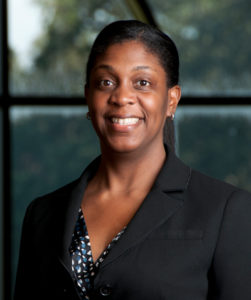 Dr. Moneque Walker-Pickett, professor and associate chair of the undergraduate criminal justice program, was selected for a prestigious fellowship program in higher education. She is one of only 38 professionals to be included in the 2020-2021 American Council on Education Fellows Program. The objective of the program is to provide learning opportunities that condense years of practical higher education experience into a curriculum of a single year. Fellows receive strategic planning training, make numerous visits to other campuses, and take part in interactive sessions. Upon completion of the program, fellows return to their own campuses better equipped to address evolving challenges in higher education. Walker-Pickett joins a diverse fellowship class comprised of individuals from Georgetown University, Purdue University, the U.S. Air Force Academy, among other institutions. In addition to holding a doctorate in sociology, Walker-Pickett holds a law degree and worked previously as an attorney. She became a full-time member of the Saint Leo University faculty at University Campus in August 2012.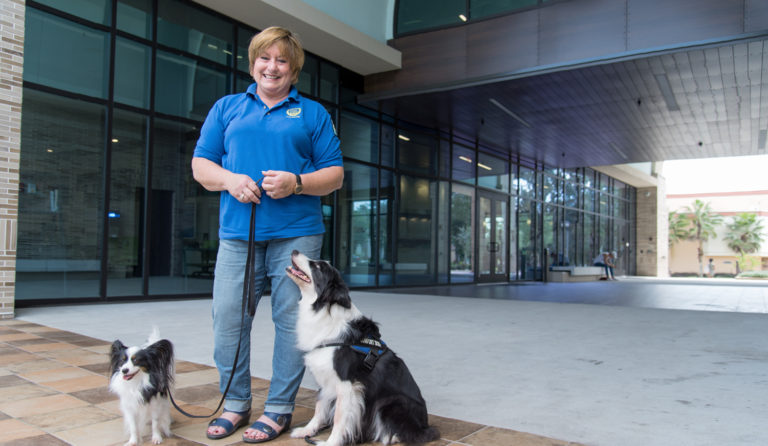
 In September 2016, the Saint Leo community grieved the loss of Alex “Pancho” Carrera, a University Campus student who passed away. In addition to receiving aid from Counseling Services and University Ministry, many students were comforted by Kashew, a border collie. Dr. Debra Mims, an assistant professor in the Criminal Justice Department, is Kashew’s owner and trainer. She has four therapy dogs (as well as three agility dogs and a cadaver dog), and she knows the benefit that therapy dogs provide.
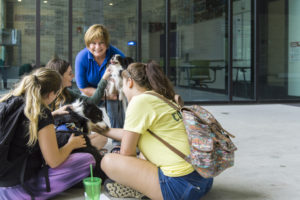 In addition to Kashew, Dr. Mims’ other therapy dogs are Disco (another border collie) and Rascal and PePe (both papillons). She finds that the smaller dogs are often best suited to young children, while adults may favor the mid-sized border collies, but every situation is different. She and the dogs work with a volunteer critical incident stress management (CISM) group that has been called to crises throughout the country. The group responded to Oklahoma City bombing in 1995, the Columbine shooting in 1999, as well as to the 2016 Pulse nightclub shooting in Orlando, FL. In Orlando, 911 operators and first responders were able to talk about their experiences and emotions, encouraged by petting and interacting with the dogs.